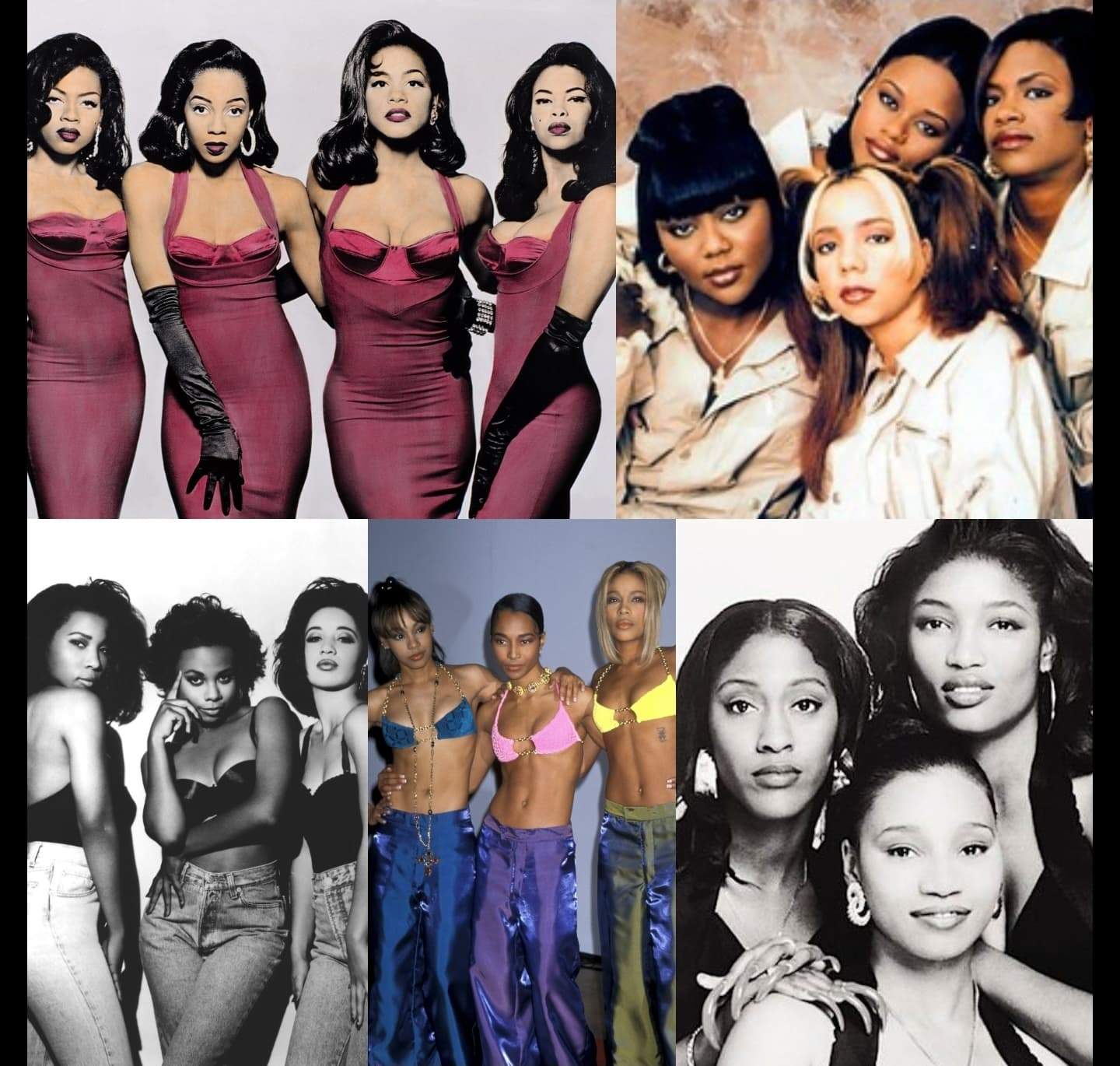
You didn’t just listen —you studied.
The way they stood together in every music video like a wall of unbothered confidence. The layered harmonies that felt like church and heartbreak and late-night phone calls all at once. You memorized their outfits, their hair flips, their eye rolls at no-good men who weren’t worth the first verse of a bridge.
There was always The Powerhouse—the one who could hit a note so high it gave you chills before the second hook. There was The Raspy One—soulful and low, adding grit where there needed to be softness. The Pretty Falsetto—the delicate, airy contrast. And The Wild Card—because every group had one.
You watched them on Video Soul. You counted down their videos on The Box. You sat too close to the TV when MTV Jams finally played that remix you hadn’t seen in months.
They weren’t manufactured for streams or TikTok virality. They were built for stages. For award shows. For radio dedications. For living rent-free in the back of your mind long after the song faded out.
And the beauty? Don’t even get started on the beauty. These women were glowing proof that Black girlhood came in every shade, every curl pattern, every lip gloss finish. They wore baggy jeans and crop tops and still looked like cover models. They rocked silk gowns and combat boots like it was nothing. Each one an entire mood board before mood boards were a thing.
Now, when you scroll playlists, you notice the gap. You hear solo voices with guest features, you hear studio tricks trying to fake what natural harmonies used to do. But that feeling—that collective sisterhood energy—feels like it’s on pause.
And yeah… you miss it. More than you admit.
So go ahead. Cue up something from SWV. Let TLC yell-sing at you. Let En Vogue remind you that vocals used to come with teeth.
Or, better yet, jump into the 90s Queens playlist on RanjiRoo Radio. Because the era when girl groups ran the world? That wasn’t just music. That was a movement.